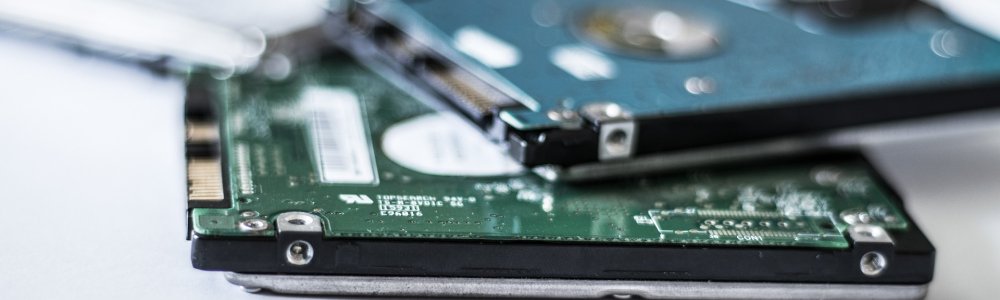
Important OpenBSD systems should be installed onto a pair of mirrored disks so that malfunction of a single disk won't shut down services and cause data loss. OpenBSD FAQ has section about Installing to a Mirror which covers both MBR and GPT partitioning schemes. Seasoned admins familiar with OpenBSD's way of naming devices and tools such as fdisk and disklabel will find everything they need regarding mirrored setup there. This article adds a bit more information about installing OpenBSD to a mirror in newcomer friendly format.

Hosting services is much more fun when we can be sure that malfunction of a single disk won't shut down services and cause data loss. FreeBSD Handbook has a chapter about Creating a Mirror with Two New Disks, but it suggests some outdated practices such as legacy BIOS boot and MBR partitioning scheme as opposed to UEFI boot and GPT partitoning scheme described in this article. Furthermore, contrary to examples in FreeBSD Handbook which use device nodes such as ada directly, this article describes using geom labels for gmirror creation. Finally, we set our fstab using custom gpt labels as oposed to automatically created partitions under /dev/mirror/ described in FreeBSD Handbook.

Large browser vendors have quite some time ago established model of "trusted" web sites based on SSL certificates signed by "trusted" CAs. This trend increasingly spreads to other applications and protocols. This article gives exact steps needed for obtaining Let's Encrypt's wildcard certificates from FreeBSD host, using DNS validation through dynamic updates of a BIND server's zones, using EFF's ACME client, certbot.

Most of the OpenBSD systems I am in charge of are deployed in data centres, powered by UPSs which provide them with electrical power during periods of public grid power outages. But there is also a number of OpenBSD systems I administer, which are deployed in much less favourable conditions; where frequent power outages last longer than UPS batteries do, or where there are no UPSs at all (such as branch office routers in godforsaken places where having electricity and Internet access at all is considered a lucky circumstance). These latter systems are likely to have high rate of unclean shutdowns caused by prolonged or unexpected power outages, which in turn increase the probability of their inability to boot without human intervention. This article describes steps to make OpenBSD system more resilient to unexpected power outages by minimising the possibility of inconsistent file systems after unclean shutdowns, which is achieved by mounting all disk partitions in read-only mode. Filesystems which have to be writable - /var /dev and /tmp - are mounted as writable memory file systems.

For quite some time I have been using openntpd instead of FreeBSD's base ntpd(8), exclusively because of the latter's tendency to bind to all available interfaces and addresses, and its former inability to be configured in a way that it binds to specific IP address. Hhowever, it appears that from FreeBSD 11.1 onwards we can specify ntpd's listen IP address(es). The following article explains how to bind FreeBSD's base ntpd to single IPv4 address, and IPv4 loopback address.